Indian Ocean Islands Games 2027 in Comoros, the Challenge Is Taking Shape
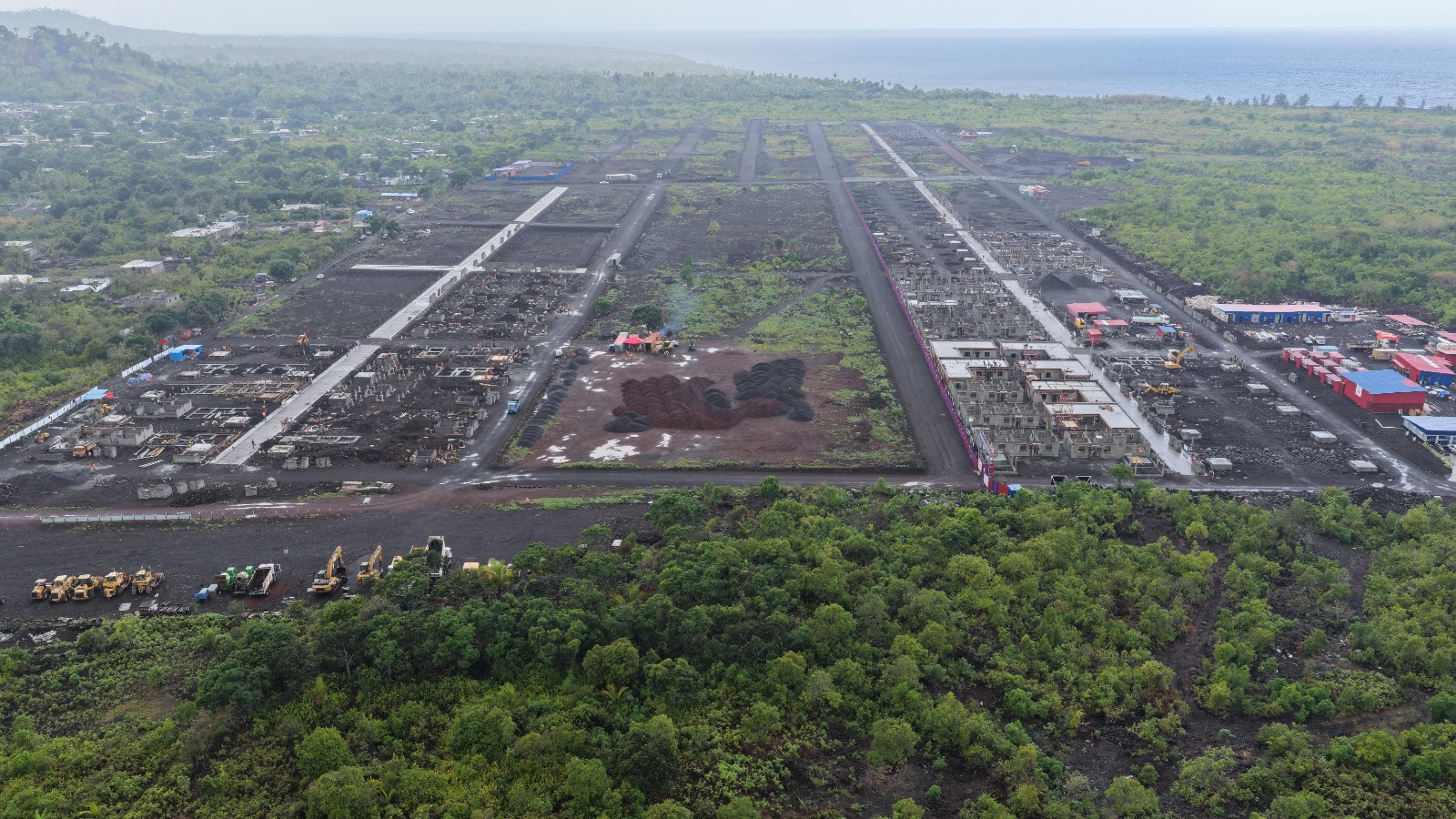
Moroni, Comoros, October 6, 2026 / TRAVELINDEX / Just a few months ahead of a historic event for the Union of the Comoros, the Village for the 2027 Indian Ocean Islands Games is beginning to take shape. In Moindzaza Djoumbé, on the outskirts of Moroni, the first villas are already clearly visible, and construction is now progressing simultaneously across several areas of the site.
When the President of the Union of the Comoros, Azali Assoumani, put forward the ambition of creating a Games Village consisting of 200 villas to accommodate delegations in 2027, the challenge was considerable: structuring the project, securing its financing, contracting companies, and above all, turning an ambitious plan into reality within an extremely tight timeframe.
That is a challenge that Faouzia Vitry, former Vice-President of the Réunion Regional Council, is now taking on. After several months devoted to structuring the project and mobilizing partners, construction has now entered a highly concrete phase. In just a month and a half of work, the first villas have reached an advanced stage of structural construction, while several dozen others are progressing simultaneously.
A Construction Site That Is Now Clearly Visible
In just a month and a half of construction, the Games Village has begun to emerge. Several villas have already reached a very advanced stage of structural work, with the walls fully erected and the first concrete roof slabs poured. Others are at the formwork and slab-preparation stage, while several dozen buildings are progressing simultaneously, from foundations to the construction of the main structures.
Aerial views show the scale of the transformation. On the site, access roads are taking shape, foundations are multiplying, and buildings are rising across several work fronts in parallel. Just a few weeks ago, the Games Village still had to be imagined from plans. Today, all you need to do is look at the images.
Financing Fully Mobilized by the Comorian Financial Sector
One of the project’s strengths also lies in its financial structure. Funding for the Games Village is being provided by five Comorian financial institutions brought together in a banking consortium, making it possible to mobilize the resources needed to build the 200 villas.
The consortium consists of AFG Bank Comores, Exim Bank Comores, Meck Moroni, the Union des Meck, and the Union Régionale des Sanduk d’Anjouan (URSA).
Within this framework, the Central Bank of the Comoros plays an essential role in oversight, coordination, and monitoring, alongside the UCCIA and the Indian Ocean Islands Games Organizing Committee (COJI), which are involved in the project’s governance and monitoring.
Beyond the 200 villas themselves, the Games Village is therefore becoming a demonstration of the ability of Comorian stakeholders to mobilize around a project of national significance: institutions, the financial sector, and businesses working together toward a shared timetable and common objective—to prepare the country to host the 2027 Indian Ocean Islands Games and leave behind a lasting legacy.
A Project with a Regional Dimension
The project brings together a range of Comorian and international companies and expertise, including Chinese companies working on the villas and the site’s infrastructure. This diversity of stakeholders reflects the scale of an operation being carried out on an exceptionally tight schedule ahead of the 2027 Games.
For Faouzia Vitry, the assignment also continues a career devoted for several years to cooperation in the Indian Ocean region. After serving as Vice-President of the Réunion Regional Council in charge of regional cooperation, she now finds herself at the heart of a project that directly connects sport, urban development, financing, and regional economic development.
The challenge remains considerable: 200 villas must be delivered on schedule to accommodate the delegations. But the first weeks of construction have already transformed the project from an ambition on paper into a visible reality on the ground. In Moindzaza Djoumbé, the future Games Village is now beginning to carve out a new part of the city.
And what if this challenge ultimately went beyond the 200 villas? The choice of Faouzia Vitry also raises the question of a new form of patriotic responsibility: that of a generation from the diaspora returning to put its experience at the service of its country of origin.
